Microsoft Dynamics Security Roles
Create users in Dynamics 365 for Customer Engagement apps and assign security roles. 19 minutes to read. Contributors.In this articleApplies to Dynamics 365 for Customer Engagement apps version 9.xApplies to Dynamics 365 for Customer Engagement apps version 9.x (on-premises)You use the Microsoft 365 admin center to create user accounts for every user who needs access to Customer Engagement apps. The user account registers the user with Microsoft Online Services environment.
In addition to registration with the online service, the user account must be assigned a license in order for the user to have access to the service. Note that when you assign a user the global administrator or the service administrator role in the Microsoft Online Services environment, it automatically assigns the user the System Administrator security role in Dynamics 365 for Customer Engagement apps. More information:Create a user accountWhen you create a user account in the Microsoft 365 admin center, the system generates a user ID and temporary password for the user. You have the option to let the service send an email message to the user as clear text.
Although the password is temporary, you may consider copying the information to send to the user through a more secure channel, such as from an email service that can digitally encrypt the contents. For step-by-step instructions for creating a Microsoft Online Services user account, see.Check out the following video:. NoteWhen you create a user and assign a license in the Microsoft 365 admin center, the user is also created in Customer Engagement apps. The synchronization process between the Microsoft 365 admin center and Customer Engagement apps can take a few minutes to complete.By entering a user ID and password, a user can access the Microsoft 365 admin center to view information about the service. However, the user will not have access to Customer Engagement apps until you assign at least one Customer Engagement apps security role to this user. TipTo force an immediate synchronization between the Microsoft 365 admin center and Customer Engagement apps, do the following:.


Sign out of Customer Engagement apps and the Microsoft 365 admin center. Close all open browsers used for Customer Engagement apps and the Microsoft 365 admin center. Sign back in to Customer Engagement apps and the Microsoft 365 admin center.User profile informationSome user profile information is maintained and managed in the Microsoft 365 admin center.
After you create or update a user, these user profile fields are automatically updated and synchronized in your Customer Engagement instances.The following table shows the fields that are managed in the Users section of the Microsoft 365 admin center. ImportantLicensed users must be assigned at least one Dynamics 365 for Customer Engagement apps security role to access Customer Engagement apps.About user licenses.Dynamics 365 for Customer Engagement apps uses user licenses to provide access to your organization.
Microsoft Dynamics Security Role Mts_tpm
You need one user license per person with an active user record who logs into your organization.When you add a new person, the New user account form displays the number of user licenses available. If you reach your limit, the On button is no longer available.
You can add additional licenses by choosing Billing Purchase Services from the left-side menu in the Microsoft 365 admin center.An unaccepted invitation requires a user license until the invitation expires two weeks after it was issued.If you have more user licenses than you are using, contact support to reduce the number of licenses. You cannot reduce the number of licenses to less than you are currently using or less than your offer allows. Any changes are reflected in your next billing cycle.Each user license requires a unique Microsoft account, and every user who logs on to Dynamics 365 for Customer Engagement apps needs a license. Most Customer Engagement apps subscriptions include a specific number of user licenses.
Security Roles In Microsoft Dynamics 365
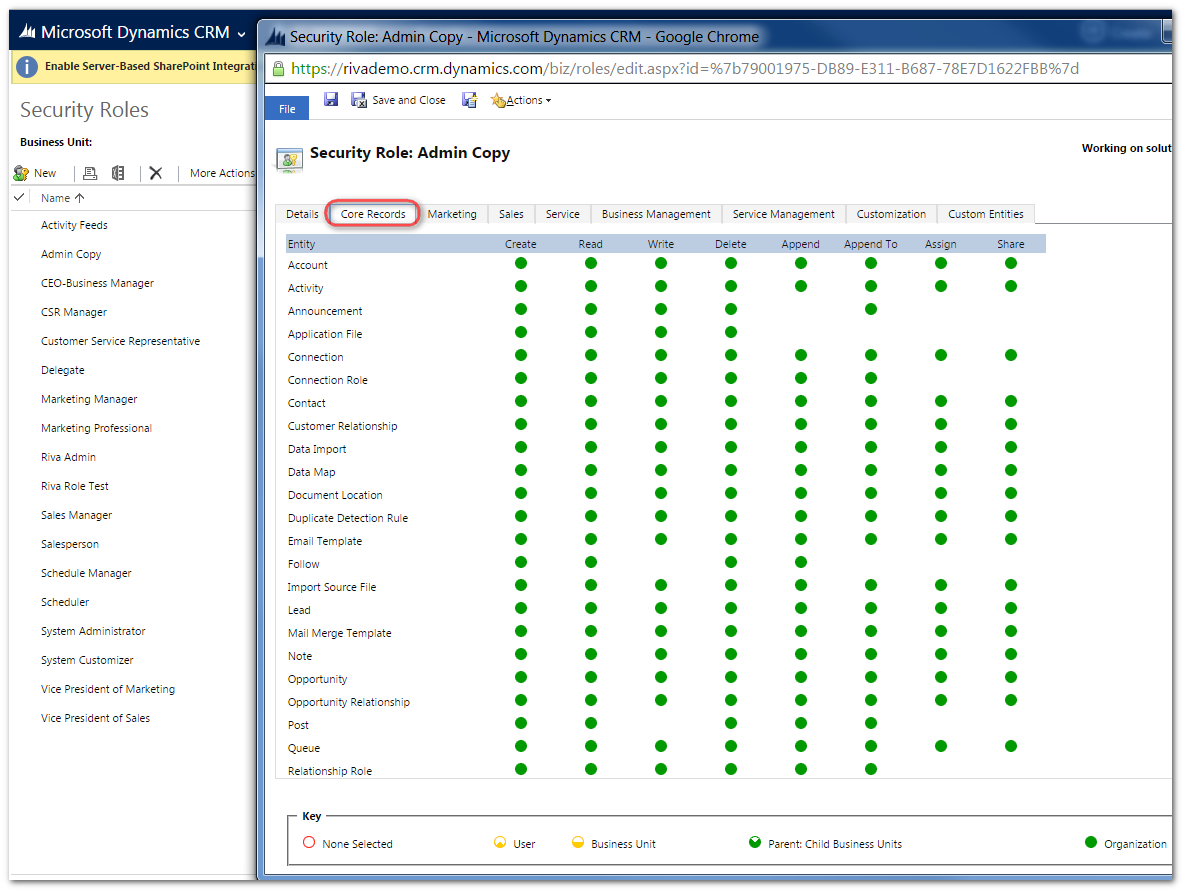
NoteThere is a set of default security roles that are assigned to users based on the license and/or solution installed. These security roles only give users Read access to apps that are installed in the instance. For example, when a user is assigned the Dynamics 365 Customer Engagement Plan license and is synced to an instance that has the Customer Service Hub app, the user is automatically assigned the Customer Service app access security role. There is no data access permission granted to this role. The administrator is still required to assign the appropriate security role to the user in order for the user to view and interact with the data.Assign a security role to a userSecurity roles control a user’s access to data through a set of access levels and permissions. The combination of access levels and permissions that are included in a specific security role sets limits on the user’s view of data and on the user’s interactions with that data.Dynamics 365 for Customer Engagement apps provides a default set of security roles.
If necessary for your organization, you can create new security roles by editing one of the default security roles and then saving it under a new name.You can assign more than one security role to a user. The effect of multiple security roles is cumulative, which means that the user has the permissions associated with all security roles assigned to the user.Security roles are associated with business units.
If you have created business units, only those security roles associated with the business unit are available for the users in the business unit. You can use this feature to limit data access to only data owned by the business unit.For more information about the difference between Microsoft Online Services administrator roles and Customer Engagement apps security roles, see. ImportantYou must assign at least one security role to every Customer Engagement apps user.
The service does not allow access to users who do not have at least one security role. NoteMicrosoft Online Services environment administrator roles are valid only for managing aspects of the online service subscription.
D365 Security Roles
These roles don’t affect permissions within the Customer Engagement apps service.Enable or disable usersTo enable a user, assign a license to the user and add a user to the security group that is associated with an instance of Customer Engagement apps. If you enable a user that was disabled, you must send a new invitation for the user to access the system.To disable a user, remove a license from the user or remove the user from the security group that is associated with an instance of Customer Engagement apps.
Removing a user from the security group doesn’t remove the user’s license. If you want to make the license available to another user, you have to remove the license from the disabled user. NoteRemoving all security roles from the user prevents the user from signing into and accessing Customer Engagement apps. However, it doesn’t remove the license from the user and the user remains in the list of the enabled users in Customer Engagement apps. Removing security roles from a user isn’t a recommended method of removing access to Customer Engagement apps.When using a security group to manage enabling or disabling users or provisioning access to a Dynamics 365 org, nested security groups within a selected security group are not supported and ignored.You must be a member of an appropriate administrator role to do these tasks. More information: Enable a user by assigning a license to the user and adding a user to the security group.Browse to the and sign in.Click Users Active users and select the user.Under Product licenses, click Edit.Turn on a Dynamics 365 for Customer Engagement apps license, and then click Save Close.In the Microsoft 365 admin center, click Groups Groups.Choose the security group that is associated with your Customer Engagement apps organization.Under Members, click Edit, and then Add members. TipTo force an immediate synchronization between the Microsoft 365 admin center and Customer Engagement apps, do the following:.
Sign out of Customer Engagement apps and the Microsoft 365 admin center. Close all open browsers used for Customer Engagement apps and the Microsoft 365 admin center. Sign back in to Customer Engagement apps and the Microsoft 365 admin center.Create a Read-Write user accountBy default all licensed users are created with an access mode of Read-Write. This access mode provides full access rights to the user based on the security privileges that are assigned. To update the access mode of a user:.Go to Customer Engagement apps.Go to Settings Security.Choose Users Enabled Users, and then click a user’s full name.In the user form, scroll down under Administration to the Client Access License (CAL) Information section. In the Access Mode list, select Read-Write.Click the Save iconCreate an Administrative user accountAn Administrative user is a user who has access to the Settings and Administration features but has no access to any of the customer engagement functionality.
It is used to allow customers to assign administrative users to perform day-to-day maintenance functions (create user accounts, manage security roles, etc). Since the administrative user does not have access to customer data and any of the customer engagement functionalities, it does not require a Dynamics 365 for Customer Engagement apps (online) license (after setup).You need to have the System Administrator security role or equivalent permissions in Dynamics 365 for Customer Engagement apps to create an administrative user. First, you’ll create a user account in Office 365 and then in Dynamics 365 for Customer Engagement apps (online), select the Administrative access mode for the account.
NoteSee for an example of how an Administrative user account can be used.in the Microsoft 365 admin center.Be sure to assign a Customer Engagement apps license to the account. You'll remove the license (step 6) once you've assigned the Administrative access mode.Go to Customer Engagement apps.Go to Settings Security.Choose Users Enabled Users, and then click a user’s full name.In the user form, scroll down under Administration to the Client Access License (CAL) Information section. In the Access Mode list, select Administrative.You then need to remove the Customer Engagement apps license from the account.Go to the Microsoft 365 admin center.Click Users Active Users.Choose the Administrative user account and under Product licenses, click Edit.Turn off the Customer Engagement apps license, and then click Save Close multiple times.Create a non-interactive user accountThe non-interactive user is not a ‘user’ in the typical sense – it is not a person but an access mode that is created with a user account. It is used for programmatic access to and from Dynamics 365 for Customer Engagement apps between applications. A non-interactive user account lets these applications or tools, such as a Dynamics 365 for Customer Engagement apps to ERP connector, authenticate and access Dynamics 365 for Customer Engagement apps (online), without requiring a Dynamics 365 for Customer Engagement apps (online) license. For each instance of Dynamics 365 for Customer Engagement apps (online), you can create up to five non-interactive user accounts.You need to have the System Administrator security role or equivalent permissions in Dynamics 365 for Customer Engagement apps to create a non-interactive user.
First, you’ll create a user account in Office 365 and then in Dynamics 365 for Customer Engagement apps, select the non-interactive access mode for the account.in the Microsoft 365 admin center.Be sure to assign a Customer Engagement apps license to the account.Go to Customer Engagement apps.Go to Settings Security.Choose Users Enabled Users, and then click a user’s full name.In the user form, scroll down under Administration to the Client Access License (CAL) Information section. NoteTo edit a specific user record, close the wizard, and then open the user record from the list.Assign a security role to a userAfter you create users, you must assign security roles for them to use Microsoft Dynamics 365. Even if a user is a member of a team with its own security privileges, the user won’t be able to see some data and may experience other problems when trying to use the system.